
Almost every family who stocks a freezer asks the same thing a few weeks in: how long does frozen meat last? The steaks from the back of the chest freezer, the burgers you forgot about, the salmon from spring. The honest answer has two parts, and most of the confusion online comes from mixing them up. Frozen meat stays safe for a very long time. It stays at its best for a much shorter, more specific window that depends on the cut, the packaging, and your freezer.
This guide uses federal food-safety guidance to give you those windows by type, then shares what we have learned stocking Southern California freezers since 2001: how packaging changes the clock, why a garage freezer in the Inland Empire works harder than you think, and how to organize a delivery so nothing gets lost in the back.
Note: We are not the Philadelphia “Personal Gourmet” brand you may see in national search results. This is Personal Gourmet, Inc., the family-owned SoCal in-person freezer-delivery company.
Safe indefinitely, best for a while
The federal Cold Food Storage Chart is clear on the main point: freezer times are for quality only. Food kept continuously at 0°F (-18°C) or below can be kept indefinitely. Freezing stops bacteria from growing. It does not stop slow changes in texture, moisture, and flavor.
So when you find a pack that has been frozen longer than the chart suggests, the question is usually not “is this dangerous?” but “will this still taste the way it should?” If the freezer stayed at 0°F the whole time, the answer to the first question is reassuring. The second depends on what it is and how it was wrapped.
How long frozen meat lasts, by type
These are the best-quality freezer times from the federal chart, for food held at 0°F:
- Steaks, chops, and roasts (beef, pork, lamb, veal): 4 to 12 months.
- Ground meats and burgers (beef, turkey, chicken, pork, and mixes): 3 to 4 months.
- Chicken or turkey pieces: 9 months. Whole birds: 1 year.
- Lean fish such as halibut, cod, and sole: 6 to 8 months.
- Fatty fish such as salmon and tuna: 2 to 3 months.
- Shrimp: 6 to 18 months. Lobster: 2 to 4 months. Shucked scallops: 3 to 4 months.
- Cooked meat or poultry leftovers: 2 to 6 months.
Two patterns are worth remembering. Ground meat has a shorter window than whole cuts because grinding exposes more surface. Fatty fish has a shorter window than lean fish because fat changes flavor over time, even when frozen.
Why packaging changes the clock
The enemy of frozen meat is air. When air reaches the surface, moisture slowly leaves the meat and you get freezer burn: dry, grayish-brown patches. The USDA’s Freezing and Food Safety guidance explains that freezer burn is a quality problem, not a safety problem. You can trim the affected spots before or after cooking. It just will not taste as good.
That is why packaging matters so much:
- Supermarket tray wrap is designed for a few days in the fridge. It is thin and lets air in, so it is the fastest route to freezer burn unless you rewrap it.
- Home rewrapping in freezer paper or freezer bags with the air pressed out helps a lot.
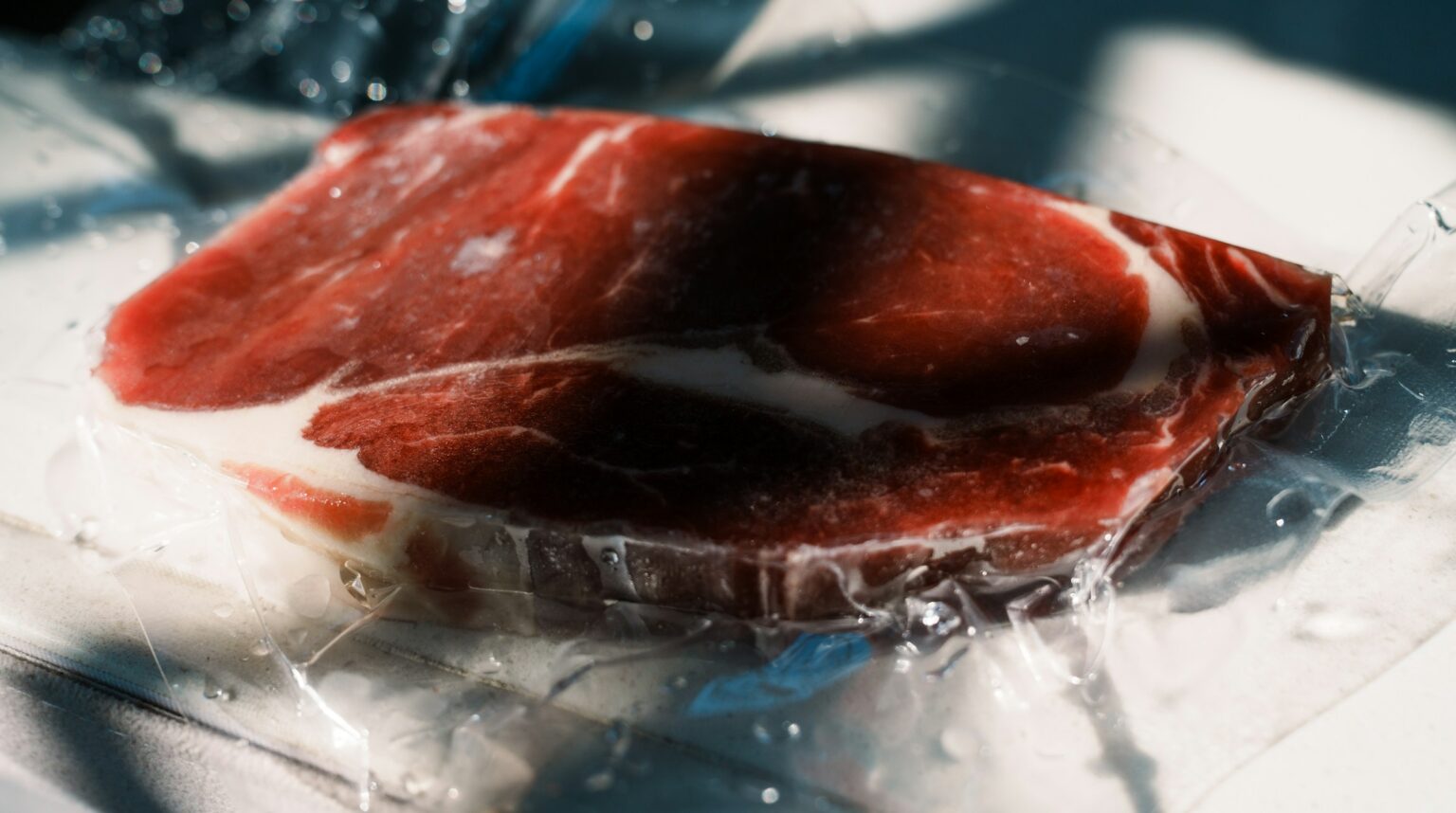
- Vacuum-sealed, individually packed portions keep air off the surface from the start. That is how Personal Gourmet products are packed: our meats and poultry are frozen and sealed once, and nobody handles them after packaging. Each portion is separate, so you thaw only what you plan to cook and the rest stays sealed.
A sealed portion that has not been opened, thawed, or refrozen holds its quality far better than a family tray that has been opened, rewrapped, and pushed to the back.
A SoCal freezer works harder than you think
The number on the chart assumes 0°F, all the time. Real freezers drift. In Southern California, we see three common problems:
- Garage freezers in the heat. A chest freezer in a garage in Riverside or San Bernardino County runs hard on a hot afternoon. Keep it out of direct sun and leave space for air to move around it.
- Door traffic. A side-by-side opened twenty times a day during summer break warms up more than one opened twice. Grab what you need and close the door.
- Power outages. According to the USDA’s guide to keeping food safe during emergencies, a full freezer holds its temperature for about 48 hours if the door stays closed, and a half-full freezer for about 24 hours.
An inexpensive appliance thermometer tells you whether your freezer is really at 0°F. It is the single most useful tool for getting the full quality window out of what you store.
First in, first out: organizing a freezer delivery
A well-stocked freezer only works if you can see what is in it. A simple system:
- Group by protein. Beef together, poultry together, seafood together.
- Put the short-window items in front. Burgers, salmon, and lobster go where you see them first. Steaks and lean fish can sit behind.
- Date anything you rewrap. A marker and a strip of tape save a lot of guessing.
- Rotate when new food arrives. Older packs move forward; new packs go behind.
When we deliver, a real person walks the order into your kitchen and loads the freezer with you, so this is a good moment to set up the order you want. On average, our customers restock every two to four months, which fits comfortably inside the quality windows above for most items. See how it works for the full delivery flow.
Thawing without losing what you saved
The USDA’s Big Thaw guide lists three safe ways to defrost: in the refrigerator, in cold water, or in the microwave. Never on the counter. Food thawed in cold water or the microwave should be cooked right away.
Individually sealed portions make the cold-water method easy. Many of our portions thaw in minutes in a bowl of tap water, still in their sealed pack, so you can decide what is for dinner when you get home. Our meat preparation chart covers cooking once it is thawed.
Want a freezer that is easier to manage?
Personal Gourmet delivers restaurant-quality beef, poultry, and seafood in person across Los Angeles, Orange, Ventura, Santa Barbara, Riverside, San Bernardino, and San Diego counties. Almost 100 gourmet items, individually packed, hand-loaded into your freezer. No minimums, no contracts, and pricing personalized to your household. Browse our products or check the service area.
Get My Personal Pricing · Call 1-888-870-FOOD
Frozen meat storage FAQ
How long does frozen meat last?
Frozen meat kept at 0°F or below stays safe indefinitely. For best quality, federal guidance suggests 4 to 12 months for steaks and roasts, 3 to 4 months for ground meat, and 9 months for chicken pieces.
Is meat with freezer burn safe to eat?
Yes. Freezer burn is a quality issue caused by air reaching the surface. Trim the dry, discolored spots before or after cooking. The rest of the meat is fine if it stayed frozen.
Does vacuum-sealed meat last longer in the freezer?
Vacuum sealing keeps air away from the meat, which helps prevent freezer burn and protects flavor and texture. It does not change safety at 0°F, but it helps meat stay closer to its best quality.
Can I refreeze meat that has thawed?
Meat thawed in the refrigerator can be refrozen, though quality may suffer. Meat thawed in cold water or the microwave should be cooked before refreezing.
Does Personal Gourmet deliver outside Southern California?
Our free in-person freezer delivery covers seven Southern California counties. Nationwide shipping can be discussed separately, with shipping and handling. Call 1-888-870-FOOD to ask.
Personal Gourmet is a family-owned Southern California gourmet food delivery company (Personal Gourmet, Inc.), in business since 2001. Storage times above summarize federal food-safety guidance for food held at 0°F; follow package directions and current USDA guidance for your specific items.